Showing posts with label wood. Show all posts

Monday, August 3, 2015

Wood and Sizing

Still stumbling under a bum leg, but have reason to be optimistic. I see the doctor tomorrow who will have more to say about this. I believe it's healing well.

Jim went ahead and prepared the wood for painting - first he has sanded it, first by using the coarse sandpaper, then the light grade sandpaper, all the way to the lightest sandpaper.

More on this video here:


The next part of the journey is, how to edit the painting to account for the canvas size? I will on facebook her put forth 2 options, one is to just edit out the sky and put as much of the action as I can, and another option is to just make a smaller canvas so that the entire picture will fit?

This is the question I sought to answer next, by taking the wood, the original painting, and through PHotoshop, trying out different layout scenarios

Here is the first, straightforward one:


Simply to reduce the size of the painting so that most of it would fit onto the canvas, leaving large portions of the bare wood visible. If I were to go on this option, I probably would not have such a stark edge, but more or less have it be softer or more blended or at least more round


The second option is to try to fit more of the  dramatic scenery into the canvas, which would mean eliminating some of the information, in this case, the sky so that the drama of the crowds watching takes precedence:


As can be noticed, my demos take the hole of the wood into account. I have to say here that even though I like the fact that there's more painting space and thus more details for the audience (and that's where Turner himself was at one point; at the beginning of the fire he and some art students rented out boats and were out there in the thick of it, sketching, then, when the roof of the building collapsed, everyone inexplicably laughed), I miss the dramatic, awesome sky and am not crazy re how the composition holds up.


The third version also removed information, but this time favouring the sky:


I actually like how this one looks the best, though Jim and others have noted how eliminating the drama of the onlookers is a big mistake.


The fourth version is based on #1, but involves making the decision to artificially extend the entire painting to fit through all the edges:


The advantage is it keeps everything in there - the sky, the audience - and it also makes use of the entire piece of wood. The painted version would obviously look a lot slicker than this quick Photoshop mock-up, but the basic idea is I would extend the sky and the bridge to the right, and the audience to the left. One disadvantage, aside from making stuff up, is that the exposition area is still small. This seems to me a visually more appealing option that just the small square though, or of leaving a lot of wood. Note again where the hole lies.


The fifth version is actually my favourite version - it actually uses the sky version (#3) which was my favourite one due to how much I liked the dramatic sky:


Here I made the #3 option, but extending the bridge as in the previous version, but also expanding the left side, and actually choosing to put all the boat people/rubberneckers/sketchers to the left hand side. In other words, I am redoing the composition, reinventing history, if you will.

I think it looks the best. I will look for feedback from others, either online or in the real world, but I'm pretty sure I will choose to do it this way.

Monday, June 15, 2015

Potential Wood for New Turner Project

I am as I had stated before prospecting the possibility of working on a new Turner reinterpretation on wood. The painting to be done is called The Burning of the Houses of Lords and Commons 


This painting in particular looks like it has a very compelling history. It was not part of my original 93 because it does not belong to the Tate collection, being instead housed in Philadelphia. Gives me something to look forward to, if I'm ever in that neck of the woods.

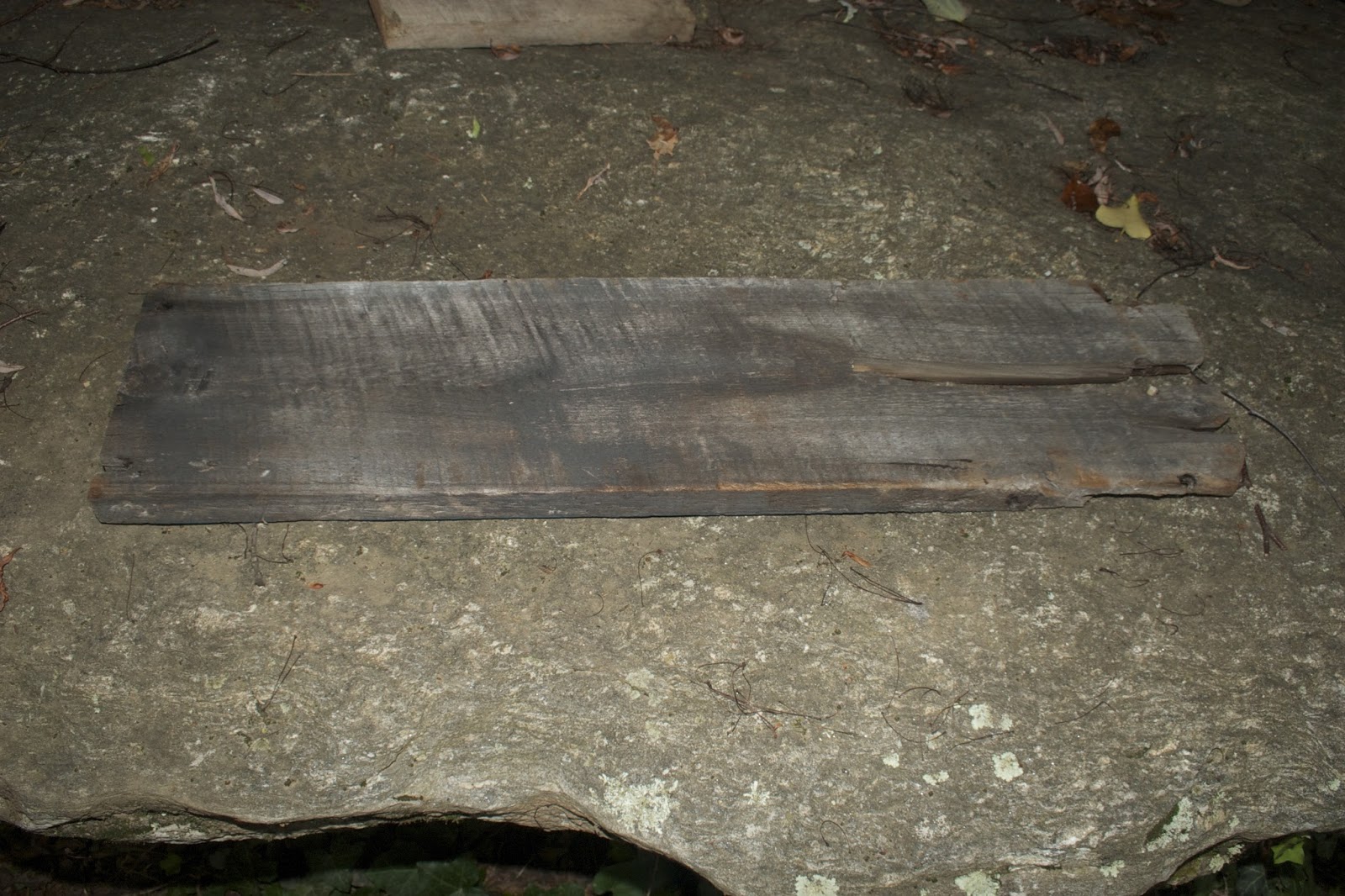
Now I have to sample the sorts of wood available for the project

We picked way many more than were necessary, but figure a choice is a useful thing to have at times. Clearly due to the nature of the medium, the shapes are a bit weird, but there it is. I will label them all by number so they can be referred to in that way. Warning also that it tends to look pretty unappealing when it' not appropriately prepared, but that a lot of potential is available. The wood really is best when seen in person, no getting around that

1) clearly a piece of barn or something 47" x 7.5"


2. This one has a nice eye in it, as well as ragged edges 31" x 10"


3. this piece of wood has 3 nails sticking out of it! It can be removed, of course
It also has a very rough working surface - 28"x 7"


4. this one has a light blue coat on the back of it - 2 are like that, actually - 28"x 7"


5. this has a very promising shape but posibly too long - 24"x5"


6. this one has great texture, and is bowed on the other side - 29" x 7"


7. This is a very special piece of wood. It stands on its own. and is a pleasing round shape. Measurements are for biggest area - 15.5" x 13 x 5.5


8. This one is really super special - it is made of weathered plywood found in the river, which has created great shapes and colours to it. It actually has sort of a burnt appearance. At one point Jim burned a poem onto it: "Any man who hides secrets in the closet of his soul will have a basement full of terror in his psyche - to soar his life to the heights of his dreams, he must somehow set his secret free." It is very subtle and almost invisible, but it is there. 22" x 16"


9. This is a fun wedge wood - I love working with these round shapes. The dark is moisture stain as opposed to fire/charred. Still some bark attached to it. 15" x 11"


10. This one has funny fissures and is not quite flat. Also in general a smaller canvas. Fun to work with, though, probably. 17" x 6" on longest edge.


11. This is the 2nd one that has the blue paint on it. Also a fun fissure on the short side. 28" x 7"


12. This is a great one that is probably too square, but is old barn wood. 11" x 10"


13. This is another fun one that stands on its own; it also has a flame-like shape. 10" x 12" x 2"


This is the best of what we could find to be available.

Tuesday, February 21, 2012

Wood, wood, wood


*note - suffering technical difficulties. Photo camera on the skids. Thus, am forced to take very dreadful webcam images. Also have lost some data which has made me sad. Will be receiving the tool that's supposed to fix the issue next week*

Wood acquisition has been a somewhat collective process - from Marshall to Hot Springs, raw materials have come our way, ready to be prepared. This rough cut video shows Jim explaining the process.

Also, I present first capital investments in the project:
Miter Saw - $100 through Craigslist
Circular Sander - $30 through Craigslist.
New CF card & reader - $22 through Amazon.
As well - order placed through local store FINALLY - more on that forthcoming.

As we see here, a vast collection of wood exists. Out of this 90 must emerge - but we begin with baby steps, preparing just 7 at a time.

I have chosen a specific shape for a specific painting. The first one to appear in the book is the moody Fishermen at Sea, an early work from 1796. The panel chosen for this has an actual hole right along the angle of the break in the clouds. This might be a disastrous choice, or it might (as I hope) augment the dramatic force of that sun doing away with the general darkness and causing the chiaroscuro elements of the piece.

Morning Amongst the Coniston Falls (image at right)(1798) seems so epic that I have opted for a larger-than-usual canvas. Possibly a bit too much to digest so early into the project, but the piece, to me, really calls for it.

Buttermere Lake (1798) requires the use of one of the ones I dearly wanted to experiment with: the slightly rounded cross-section of a tree trunk. The ray of light and the rolling hillsides relate well to the natural grain of the wood rings - here's one I might try with transparent gesso.

The week takes me through The Goddess of Discord Choosing the Apple of Contention in the Garden of the Hesperides (1806), which is quite a mouthful, as well as a lot to take in visually. Woods have been chosen for all, and will soon be prepped and primed.


(love this site)

Friday, February 10, 2012

Preparation - hunting & gathering


What have I been up to the past few days since the successful launching of my campaign? On the one hand, tending to other important matters re. life in general and this project in particular - some of that has included what I am coming to share today.

Jim is an inveterate lover of wood. All sorts of wooden objects already exist in our lives - a lot of them interesting shapes not appropriate for the project, but yes useful for one of his projects, homily sticks & ponder panels.

Nevertheless, we have found many panels and other wood objects amid our own stash of 'treasures'. We have also gone on walks through the Ivy River trail and the Laurel River in search of great canvases - we're pretty sure we have enough raw materials to begin our process.

However (as can be seen here) finding wood is only part of the battle!

What remains is the need to
  1. clean and de-bug them (yes, nature at work!)

  2. cut them down to size

  3. sand the actual wood itself

  4. gesso them - a process involving gesso, waiting for it to dry, gessoing again, sanding down what's been gessoed, then applying a new layer


  5. Amid discussions with the parties involved, we have decided to prepare 'canvases' on a weekly schedule. My associate for the project thinks he can get 6 of them to me before the beginning of the week, which would allow me to grab them and get to work.

    An additional interesting tidbit comes re. the choices for sizes. When I first conceived of this project (and came up with the three prototypes) I was planning on making all of these on small pieces of wood - not much more than 6in x 12in in size. However, as I study the images on the book, I have come to see some of them as requiring a bigger canvas - some of them because they originally were in huge canvases, others because the level of detail demands a bigger surface and, paradoxically, some of them prove so simple and impressionistic that I fear that any artistic merit would be lost in a smallish display.

    This image, from around 1840 titled "Sun Setting Over a Lake", shows some of the trademarks of his later work - a translucent use of light and the Impressionistic consciousness that no doubt influenced or informed the work of later Impressionists in France and elsewhere. It measures 35in x 48in, thus is essentially a large piece - but more importantly to me, how to reproduce it on wood without completely losing any pictorial or artistic merit? This is a difficult style to replicate - even more so than the earlier pieces where the pictorial nature of boats and oceans and whatnot carry the piece through.

    I feel like a larger canvas would at least lend greater meaning to this piece, as well as a purposefully textured piece of wood - i would gesso and sand it lightly so that some of the shapes would shine through.

    This is a fundamental reason for undertaking this project, though... to ask myself these questions from a painterly and historical perspective, to remain faithful to what the artist sought to produce, as well as to find a way to make the pieces compelling in their own right. By asking and answering these questions, through a long-term unrelenting process, I have faith I will find a new relationship with painting in general and this artist (and his many guises) in particular.